
the 11 year old from Salford who’s electric glasses could help people with dyslexia

A young Salford inventor has won a national engineering award for creating colour-changing glasses that could help people with dyslexia read more easily, with the prototype already attracting interest from the NHS.

Millie Childs developed the idea while she was a pupil at Light Oaks Junior School, taking part in Primary Engineer, a national competition that challenges pupils to design creative solutions to real-world problems.

Her invention, Rainbow Glasses, features a pair of glasses with interchangeable or adjustable coloured lenses designed to reduce visual stress and improve reading comfort for people with dyslexia.

See it all HERE
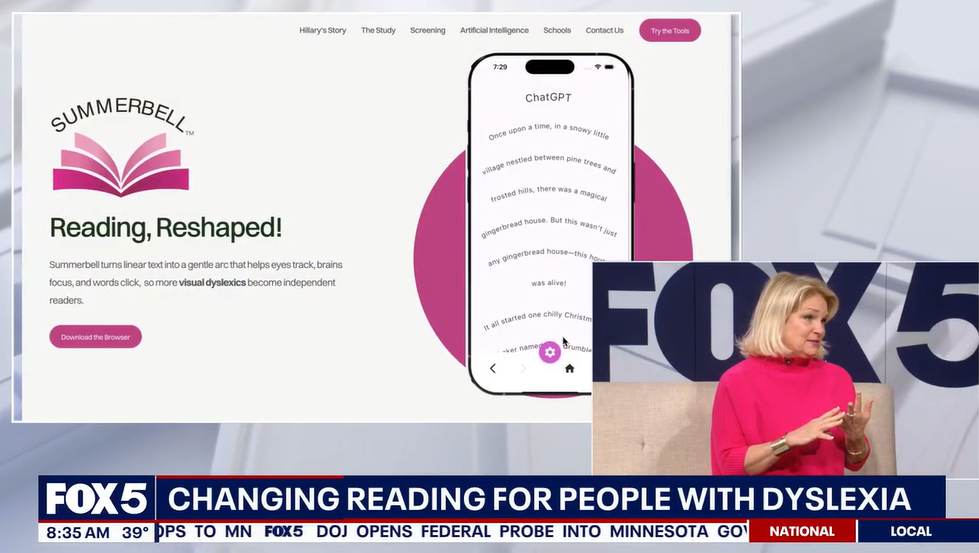
America’s Spelling Crisis: Why Spellcheck Can’t Save Your Child

Key Takeaways:

  • Learning to spell builds the linguistic foundation children need for reading, writing, and lifelong communication
  • Technology tools like spellcheck and ChatGPT mask learning difficulties and can delay diagnosis of dyslexia
  • Experts recommend 20 minutes of daily spelling instruction using science-based curricula, not just memorization

See the full post HERE

Is It Time to See Dyslexia as a Superpower?

A new film reframes dyslexia as a distinct cognitive style with its own set of strengths.

Doctors Fernette and Brock Eide, psychologists who’ve studied dyslexia for decades, have come to believe that dyslexia is “not a disease, but a gift.”

As they put it, “Dyslexic minds are not disabled. They’re specialized. They’re wired to learn best through direct experience, not through print or rote repetition.”

See the original article HERE

Developmental language disorder can have life-long effects – and it’s easily missed in multilingual children

developmental language disorder (DLD), a condition that severely impairs a child’s ability to learn, use and understand spoken language.

Such challenges are increasingly common for parents and teachers. In England, for example, around 21% of schoolchildren are growing up with a first language other than English. While most children’s language development – whether monolingual or multilingual – is typical, the average classroom includes two DLD-affected children. DLD’s prevalence, roughly 8%, is similar worldwide, from China to Mexico.

Even so, DLD remains under-recognised and under-served – especially compared to other developmental conditions, such as dyslexia, autism or attention deficit hyperactivity disorder (ADHD).

Read the whole article HERE